
How we work
With a one-off, it is always the result that gets photographed. But what decides whether it will be beautiful happens earlier, in five moments that no catalogue lists.
A bespoke piece is not chosen: it is dimensioned
The difference between buying a fitting and having one made is not the price: it is who takes the decisions, and when. On a catalogue piece every decision has already been taken by somebody else, and what is left is choosing between the available variants. On a bespoke piece the decisions are still open — the height, the diameter, the number of sources, the way it comes apart for cleaning — and each one has to be taken by somebody, in a definite order, with somebody else approving it.
Which is why a bespoke project is badly told by a single photograph. The photograph of the finished piece is the last of the steps, and says nothing about the five that made it possible. Here they are in order, one by one, with what has to be decided and what has to be asked in each.
First step · the hand drawing, with a code in the corner
The design starts on a sheet of paper: the sections, the curves of the tubes, the dimensions, and in one corner the code — in this case GF200 — which from that moment accompanies the piece into the workshop, onto the delivery note and onto the site. It is not nostalgia for pencil drawing: it is the quickest way to show a client how far down it will actually come, before anybody cuts a tube.
That code does a job that gets underrated. It is the only identifier that survives every handover: the approved drawing, the order, the delivery note, the box on site, and in five years the request for a spare. A piece without a code is a piece that in five years gets described in words, and words are not enough to order a piece of glass.
Second step · under the tubes there is a machine
The bare structure on the bench is the part nobody will ever see: radial arms, lampholders, the cable run. On it depend the distance between the sources — that is, how even the light will be — and the weight the chain will have to carry, that is, what the ceiling will have to bear.
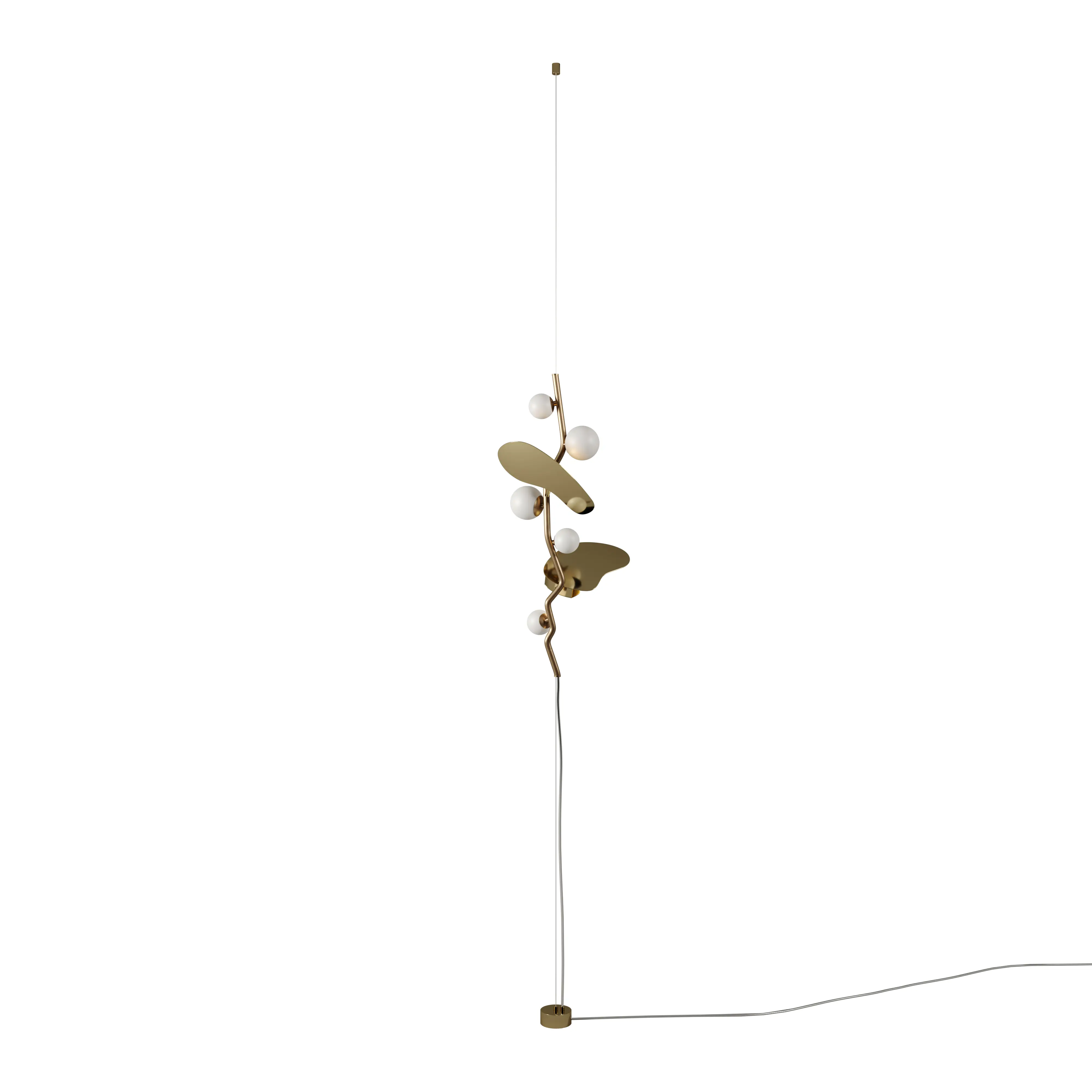
It is also the part that decides whether the piece can be maintained. Changing a lamp on a fitting three metres tall is a problem solved at the bench, not afterwards: if the lampholders can only be reached by removing the tubes, every replacement becomes an operation with access equipment. The question "how is a source changed?" belongs to the time when the structure is still a drawing.
Third step · the test panel
The tubes are mounted on a wooden panel, with the chrome bracket at the centre, so they can be looked at still: how far they project, how they take the light, whether the bracket shows. It is a step that produces nothing deliverable, and for exactly that reason it is the first to be dropped when things run late.
The arithmetic, though, is simple. A fault found on the panel costs an hour: one tube is moved and it is looked at again. The same fault found on the assembled piece costs a week, because getting to it means taking apart everything around it. And found in the client's house it no longer costs time: it costs credibility.
Fourth step · the suspension test
Before shipping, the piece is hung from its own chain in the workshop, against a white backdrop, and looked at from near and far. A chandelier resting on a bench lies: the tubes do not hang as they will hang, the centre of gravity is not the real one, and there are no shadows at all.
It is the step that avoids discovering in the client's house that two rings touch when the piece turns — which a hanging fitting does, because air moves. Anyone buying a one-off should ask whether the suspension test is included, and ask for a photograph of the piece hanging before it ships: two lines in an order, and they change the odds that installation goes smoothly.
Fifth step · the view from below, which does not match the drawing
The last check is made by standing where the people will be: underneath. It is a view that almost never matches the drawing, because the drawing is an elevation and from below you see a plan. The concentric rings tighten towards the centre and the tubes step down: from there the piece does not read as a hanging object, but as a drawing on the ceiling.
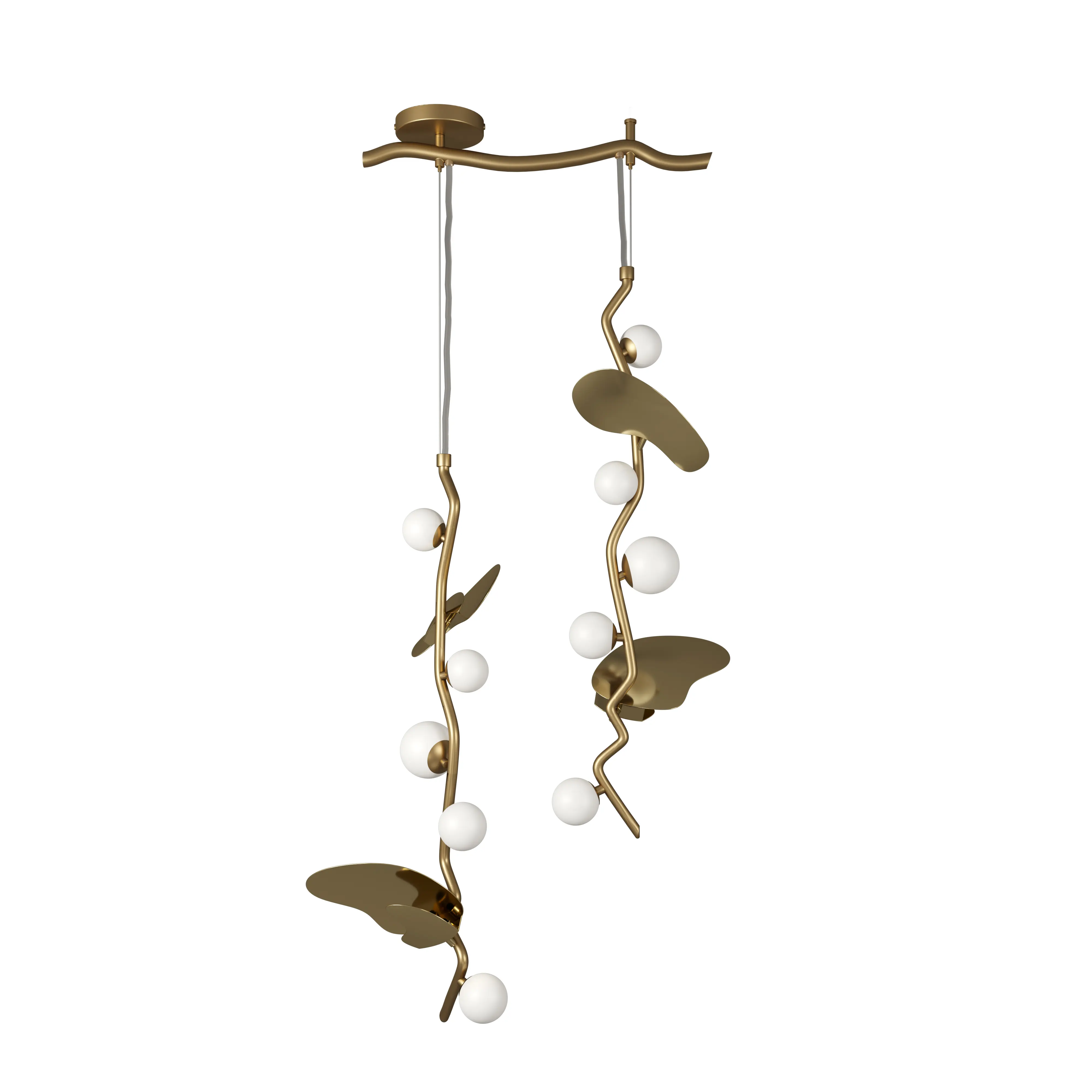
Over a dining table this is the view that counts all evening, and in an atrium it is the view of everybody walking through. Checking it is the only way to know whether the piece really works in the place it is going: a fitting that is handsome in profile can be confused from below, and the other way round.
How long it takes, and why time does not compress
The question that always comes is "how long". On a one-off the answer has a different shape from a supply: it is not a delivery time, it is a sum of steps, and some of those steps do not shorten by adding people. Bending a profile and reworking it until the joint cannot be felt is one pair of hands.
A practical piece of advice follows, worth more than any estimate: ask for the sequence instead of the date. A sequence shows where time can be won — usually in the approvals, which are the client's time — and where it cannot. A single date hides both, and when it slips nobody knows why.
A one-off quotation has lines a catalogue does not
Comparing the price of a bespoke piece with a catalogue fitting line by line does not work: the first contains items that in the second have already been paid for by somebody else. The drawing, the sample, the test panel, the suspension test: on a catalogue product they exist, but spread over thousands of pieces.
An honest quotation declares them separately, and that makes possible a conversation you otherwise cannot have: which of those steps are wanted, and which are accepted as skipped. It is a legitimate choice — sometimes the test panel is not needed — but it has to be the buyer's choice, not a decision taken quietly by the seller.
Who approves, and on what
Between order and production there is at least one approval, and often three: the shop drawing, the finish sample, and the test with the piece assembled. Each stops the work until the answer comes, and the sum of those waits is almost always longer than the work itself.
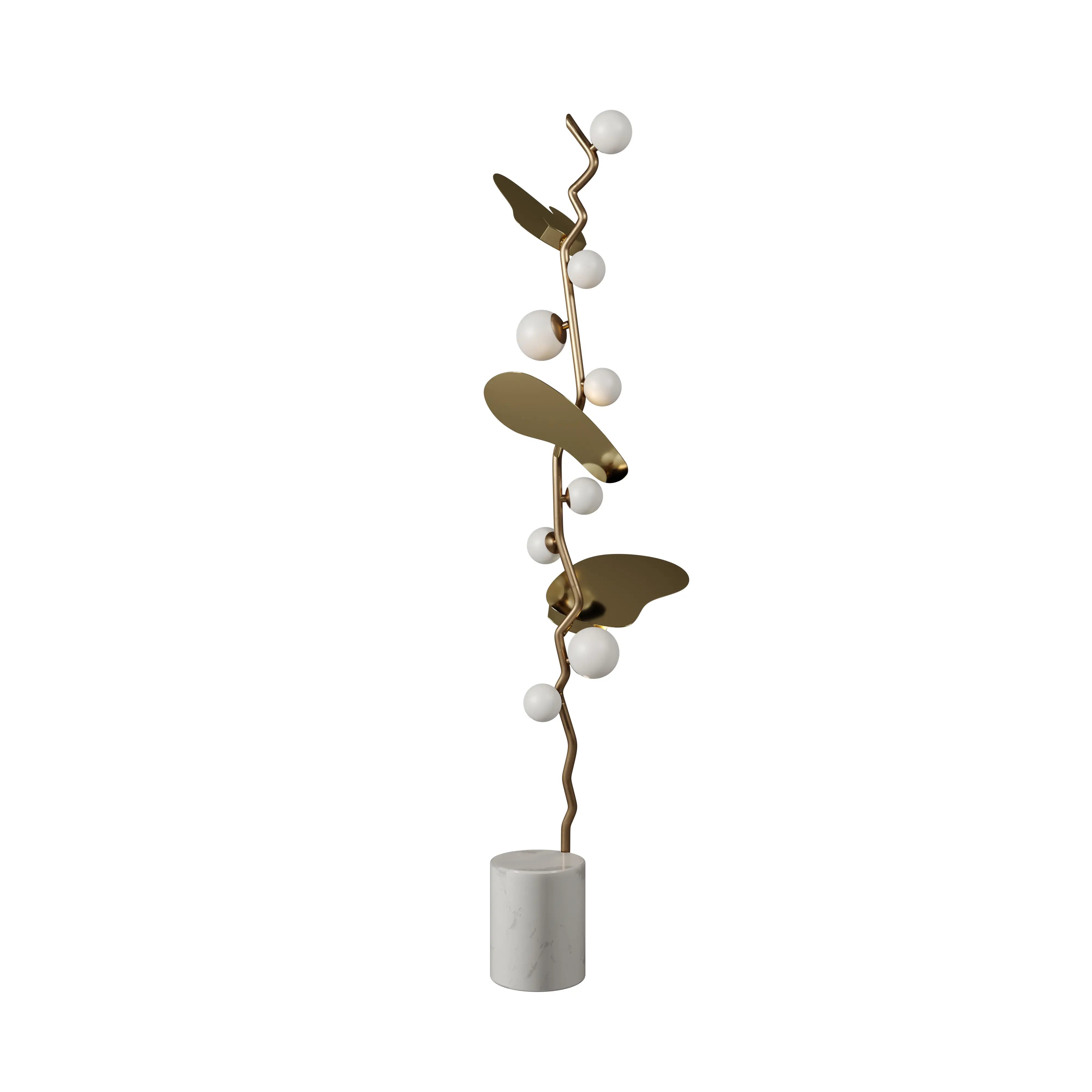
Whoever orders can shorten that time in one way only: decide beforehand who signs. An approval that has to pass three people in two countries is not an approval, it is a calendar risk. Writing the name of the person who answers into the quotation is worth more than any penalty clause.
What arrives on site, and in how many crates
A large piece does not arrive assembled: it arrives in parts, in a number of crates that has to be known beforehand. Whoever receives it needs to know how much room is needed, what the heaviest crate weighs and whether equipment is needed to unload — three pieces of information that fit on one line of a delivery note.
The second question is who assembles it. On a fitting made of many elements, installation is not an electrician's hour: it is a phase, with its own sequence and its own equipment. Asking in the quotation costs nothing; finding out on delivery day costs the day of everybody who was there to do something else.
And if it breaks in three years?
On a one-off this question has a different answer from a catalogue product, and it is worth hearing before signing. A catalogue fitting either has the spare or has been discontinued; a bespoke piece is never discontinued, but the spare has to be made again, with the timings and minimums of real work.
The two things that keep that route open are bought today and cost little: a few spare elements from the same batch, and the shop drawing kept together with the code. With those two objects a piece is remade identical years later; without them it is remade similar, and similar shows in a row.
What to put in writing when ordering a one-off
None of these five steps is free, and none is a given. If they are not written into the order, the supplier will do as many as they usually do — which may be five or may be two. They are five lines:

- the code of the piece, which must appear on drawing, order, delivery note and packaging
- how a source is replaced, and whether access equipment is needed to do it
- whether a test panel is planned, and whether a photograph of it is sent
- whether the piece is hung in the workshop before shipping, and with what documentation
- a view from below, rendered or photographed, because it is the view of whoever sits under it
| The step | What it produces | What skipping it costs |
|---|---|---|
| Hand drawing with the code | a real dimension and an identifier that lasts | in five years the piece gets described in words |
| Bare structure on the bench | spacing of sources, weight, maintainability | changing a lamp becomes a job with access equipment |
| Test panel | projection, reflections, visible bracket | an hour of correction becomes a week |
| Suspension test | how it really hangs, and the shadows | two rings touching are found in the client's house |
| View from below | what the person at the table will see | a piece handsome in profile and confused from underneath |
The fault shows when it is lit
Gilded tubes reflect rather than diffuse: unlit they say one thing, lit another. Every test has to be made with the source on, and at the colour temperature it will have in use — a piece tested at 4000 K and installed at 2700 K is not the same piece.
A one-off has a one-off spare
If the tubes are cut and bent to size, the spare cannot be bought: it has to be made again. It is worth ordering a few extra with the piece, while the tooling and the gilding bath are still the same ones — and keeping them on site, not in our warehouse.
The private client does not appear
This page carries no surname, and not out of formal confidentiality: a residential project is somebody's home. The public name is the internal code, which can be read on the drawing — and it is also the only name needed to order a spare.
The whole project, with the photographs
GF200 is the one page of ours that shows the process: the hand drawing, the bare structure, the test panel, the workshop test, the finished piece and the room.
See the GF200 projectA bespoke pieceFree lighting calculation