
Timings and site
A bespoke supply has two dates, and the one that derails the site is not the one written in the quotation.
Two dates, not one
On a bespoke supply everyone watches the delivery date, because that is the one printed in the quotation. But the real constraint is another: when the setting-out is needed. The fixing point, the junction box, any opening in the suspended ceiling have to be decided long before the piece exists.
They are two dates governing different things and belonging to different people: the first serves the site, the second the warehouse. Keeping only the second is the commonest way to push an opening back without anybody having done anything wrong — and without there being anyone to hold to account.
What the setting-out drawing has to say
The drawing the site needs is not the drawing of the fitting: it is far poorer, and for that reason it can be issued far earlier. Four figures on one sheet, and they have to be asked for with the order, not afterwards:
- fixing point or points, with spacing and number
- expected weight, declared with a margin
- position of the cable exit relative to the fixing
- height from finished level, that is from finished floor and not from slab
Approval is the client's time
Between order and production there is almost always something to approve: a sample, a shop drawing, a finish. That step is not the supplier's time, it is the client's time — and it is spent at the speed at which the client manages to decide.
If approval takes three weeks, delivery moves three weeks, and no production run can win them back. It is time to allow for at signature, not to argue about at the end: a quotation that says "delivery N days from approval" is saying exactly this, and it should be read as a condition, not as a formula.
The sample lengthens things, and is worth it anyway
There is a recurring temptation when things run late: skip the sample and go straight into production. It saves the sample's days, and it is almost always a bad bargain — because those days are only recovered if everything is right first time.
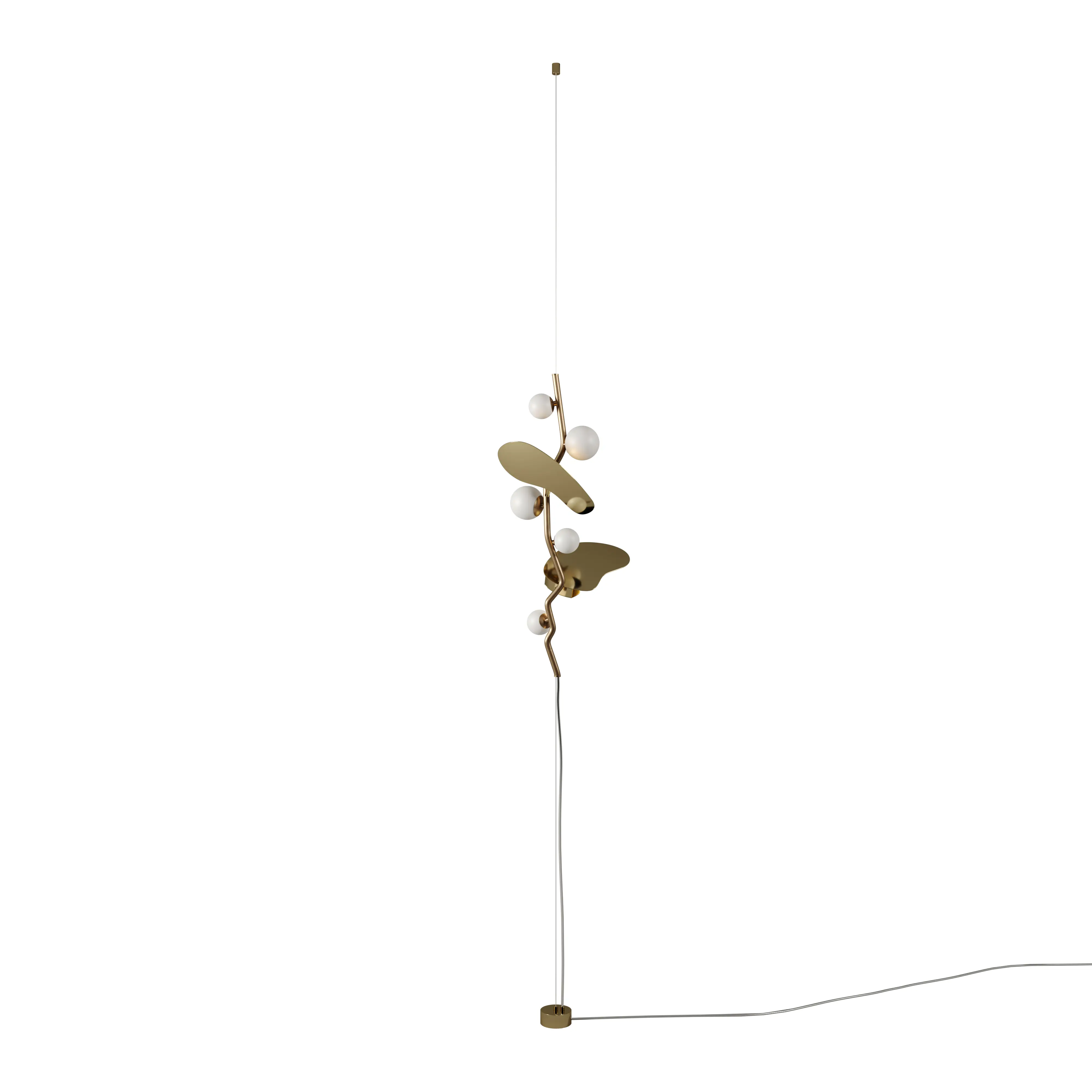
The arithmetic is asymmetric: the sample costs a few days always; not checking it costs an entire production run sometimes. And on a repetitive supply, "sometimes" means discovering a wrong tone across fifty pieces already made.
Who installs it, and with what
A large piece arrives in parts and is assembled at height. With which lifting equipment, in which week and at whose cost are questions for the quotation stage, not for delivery.
The reason is simple and known to everybody who has watched a job finish: the scaffold, the platform, the crane — when they are needed they are there, and as the job moves towards completion they come down. Asking about installation afterwards means asking when the equipment has gone.
Access equipment is a window, not a service
It is worth saying explicitly, because it is the mistake that costs most and looks most harmless: access equipment on a site is not available on request, it is available within a time window. That window is decided by other trades, usually finishes and decoration.
A fitting delivered on time but installable only after that window has closed is, from the site's point of view, a fitting delivered late. So delivery is planned against the window, and not the other way round.
What happens if the drawing arrives after the plasterboard
If the setting-out drawing arrives after the suspended ceiling is closed, the delay is formally not the supplier's: delivery may well be on date. But the cost is there all the same, and the site pays it as opening up, reinforcing, closing again, filling and repainting.
It is exactly the situation in which everybody is right and the project loses. The only way to avoid it is to have two dates in the quotation instead of one, and to treat the first as the more important.

If the piece arrives before the window, where does it wait?
This is the question that closes the loop, and almost nobody asks it in the quotation. A large fitting delivered ahead of the installation window has to be somewhere, and the two possibilities have different consequences: it stays in the supplier's warehouse, or it arrives on site and waits there.
On site a large crate takes up room, gets moved several times and takes knocks; and at the moment it is unloaded, usually, the risk passes. Settling in the quotation who holds it, until when and at whose cost takes one line — and removes the most unpleasant discussion that can arise at the end of a job, the one about a dented one-off that nobody can date.
Why a bespoke delay is not like a stock delay
On a stock supply a delay can be recovered: order earlier, ship faster, pay for express transport. On a bespoke supply it cannot, because the time is not in the transport but in the work and the approvals, and neither speeds up by paying.
It follows that the two kinds of supply need different tools. On a stock one you check the order status; on a bespoke one you check the status of the sequence: where we are, what is waiting for what, and who is holding the ball right now. It is the only question that produces a useful answer.
The buyer can do one thing to protect themselves, and it belongs at the start: get the sequence in writing, with names. It does not need to be detailed; it needs to say who does what. A calendar without names is not a calendar, it is a wish.
The sample: what making it costs, what skipping it costs
There is a recurring temptation when things run late: skip the sample and go into production. It saves the sample's days, and it is almost always a bad bargain — because those days are only recovered if everything is right first time.
The arithmetic is asymmetric, and that is why it is worth writing down: the sample costs a few days always; not checking it costs an entire production run sometimes. On a repetitive supply "sometimes" means discovering a wrong tone across fifty finished pieces, and at that point there are no days to recover.

The warehouse is not the site
A fitting delivered before the installation window has to be somewhere, and the two possibilities are not equivalent: it stays at the supplier, or it arrives on site and waits there. On site a large crate takes up room, gets moved several times and takes knocks.
And there is a contractual point almost nobody looks at: at the moment it is unloaded, the risk usually passes. Settling in the quotation who holds it, until when and at whose cost takes one line, and removes the most unpleasant discussion that can arise at the end of a job — the one about a dented one-off that nobody can date.
Commissioning is not the moment to discover things
At commissioning you verify that what was planned works. If at commissioning something is discovered — an incompatibility, a dimming range that does not go down, a control that does not talk to the fitting — it is not a badly run commissioning: it is a sample that was never made.
The practical rule that follows is simple: anything that could surprise you at commissioning has to be tested beforehand, on one piece, with the real components. It costs a day and moves the discovery to a moment when alternatives still exist.
Penalties do not recover time
A penalty clause is useful for sharing a loss, and useless for avoiding one: no hotel opens because the supplier has paid. On a bespoke supply a penalty is also hard to apply, because a delay almost always has several causes and at least one belongs to the client — usually an approval.
What works in its place is less dramatic and more effective: intermediate dates with names. The drawing by day x, the approval by day y, the sample by day z. Every missed date shows at once, and while there is still time to do something about it.
What to ask when the job is already late
It happens, and almost never because of the lighting: you arrive at the supply with less time than it takes. At that moment the right question is not "can you go faster", but what can I remove.

Some things can be removed without permanent damage and others cannot, and it is worth knowing which before choosing. A special finish can be swapped for a standard one; an approval stage can be shortened by deciding beforehand who signs; the sample, on a repetitive supply, is the last thing to remove — because it is what protects all the other pieces.
Both dates, in writing
A complete bespoke quotation contains these lines. None of them costs anything extra, and together they remove most of the delays that later have no culprit:
- the date of the setting-out drawing, separate from the delivery date
- what the drawing contains, item by item
- how many approval days are allowed, and from when they run
- whether a sample is planned, and what happens if it is skipped
- who installs, with what equipment, and in which site window it happens
| The date | Who needs it | What happens without it |
|---|---|---|
| Setting-out drawing | the site | closed plasterboard gets opened |
| Sample approval | the client | production does not start, and nobody says so |
| Delivery | the warehouse | the piece arrives with nowhere to go |
| Installation window | whoever installs | the scaffold has already come down |
| Commissioning | everybody | incompatibility is discovered at the end |
| Spare | whoever will operate it | in three years nobody knows what to order |
Ask for the right date
"When do you need the setting-out?" is the question a bespoke supplier expects and almost nobody asks. The answer comes in a day and is worth weeks on site.
Height is measured from finished level
From slab or from finished floor can differ by several centimetres, and along a row of fittings the difference shows. The drawing has to say where it is measured from, not only how much.
The delay with no culprit
Delivery on date, setting-out missing, fitting not installable: nobody was wrong and the project lost. It is the commonest form of delay on a bespoke supply.
Both dates, in writing
Ask us for the quotation with a dated setting-out drawing: it is the document the site can plan against, and it costs nothing extra.
Ask for a bespoke quotationFree lighting calculationThe properties we have lit